They line our roads, define our pavements, and channel our stormwater—yet kerbs are often the unsung heroes of infrastructure. These seemingly simple concrete elements perform critical functions that impact road safety, drainage efficiency, and urban aesthetics.
At Majorcon Precast, we manufacture a comprehensive range of concrete kerbs for every application. This guide explains the different types, their functions, and how to select the right kerb for your project.
What Exactly is a Kerb?
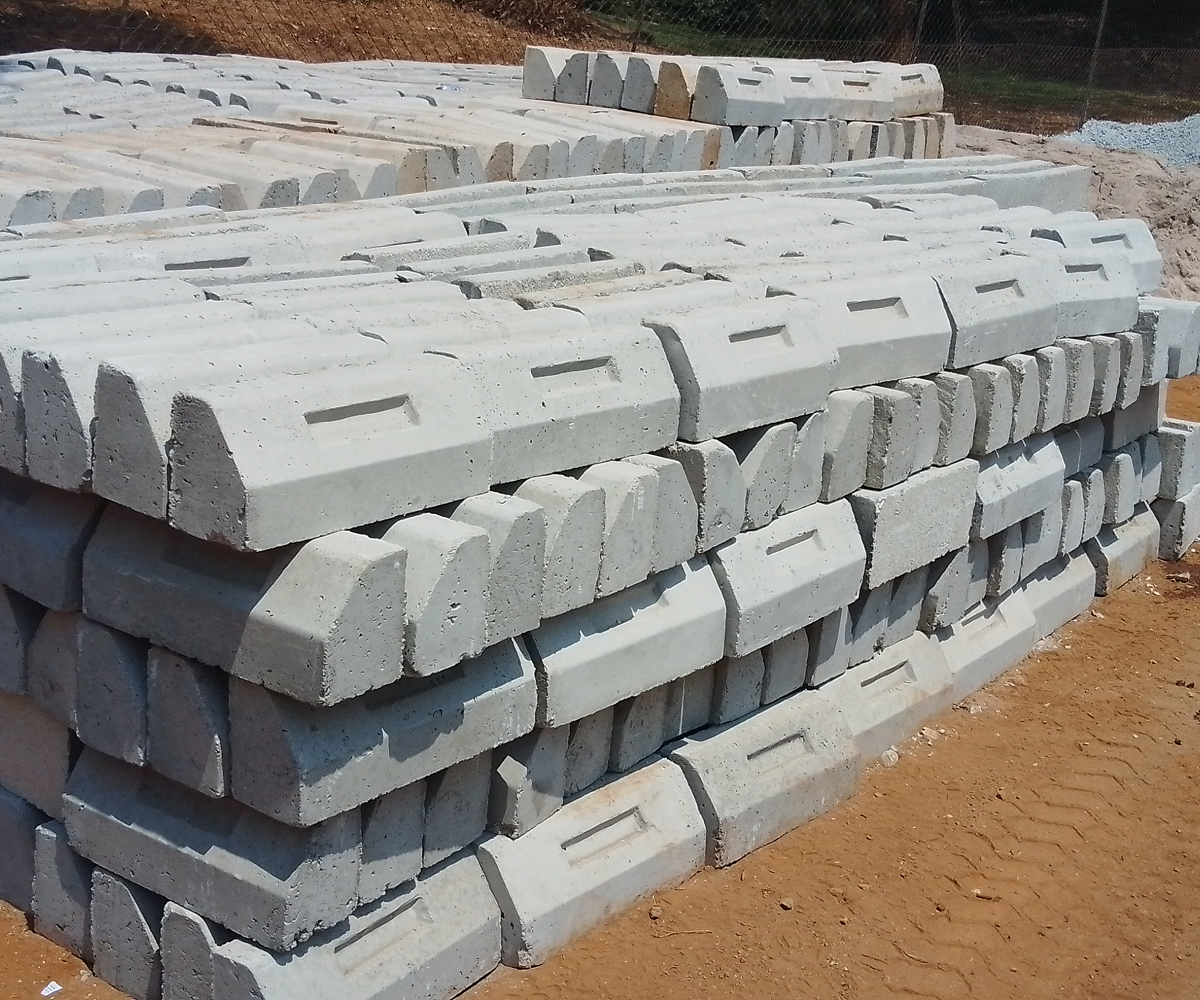
A kerb (or curb) is a linear construction element made of concrete that forms the lateral boundary of roadways, sidewalks, plazas, and green spaces. It organizes traffic areas, protects surfacings from edge breakouts, conducts surface water, and creates transitions between different zones -3.
The Essential Functions of Kerbs
Before diving into types, it’s worth understanding what kerbs actually do:
1. Delineation and Guidance
Kerbs visually define the edge of the roadway, guiding drivers and helping pedestrians identify safe areas. The vertical face provides a clear boundary that motorists recognize -7.
2. Load Transfer and Edge Stabilization
By providing a solid edge restraint, kerbs prevent pavement edges from crumbling or spreading under traffic loads. This is particularly critical for asphalt surfaces, which require firm edge support -3.
3. Drainage Channeling
Kerbs direct surface water toward gullies and drainage systems. The interface between kerb and roadway creates a channel that efficiently guides runoff, preventing flooding and erosion -3.
4. Safety and Vehicle Control
Different kerb profiles serve different safety functions—from barriers that prevent vehicles leaving the roadway to mountable profiles that allow occasional crossing -7.
Majorcon Precast Kerb Types
Municipal Kerbs
Description: Standard kerbs for urban roads and public infrastructure, featuring a half-battered (slightly sloping) profile that provides a clear visual barrier while allowing some vehicle encroachment in emergencies -7.
Applications: Urban roads, streets, public infrastructure projects
Load Rating: Moderate to heavy traffic
Key Benefit: Balances safety with practical urban requirements
Light Duty Kerbs
Description: Smaller profile kerbs designed for areas with minimal traffic load. Often used with a bull-nosed edge for pedestrian-friendly environments -7.
Applications: Residential roads, parking bays, driveways, garden edging
Load Rating: Light vehicles only
Key Benefit: Cost-effective for low-traffic areas
Heavy Duty Kerbs
Description: Larger, stronger kerbs with enhanced concrete strength (50MPa+) designed to withstand high traffic volumes and heavy vehicle loads -7.
Applications: Highways, industrial areas, commercial zones, bus lanes, loading bays
Load Rating: HGV, buses, high-frequency traffic
Key Benefit: Maximum durability for demanding environments
Hollow Mountable Kerbs
Description: Specially designed kerbs with a sloped profile that allows vehicles to cross safely when necessary. The hollow core reduces weight while maintaining structural integrity -7.
Applications: Service stations, parking lot access points, driveways, emergency access routes
Load Rating: Light to medium vehicles (occasional crossing)
Key Benefit: Maintains kerb line while permitting vehicle access
New Jersey Barrier Kerbs
Description: Heavy safety barriers with a distinctive sloped profile designed to redirect vehicles and minimize collision impact. The sloping face causes vehicle wheels to ride up slightly, using the vehicle’s weight to slow it and guide it back onto the roadway -3.
Applications: Highway median separation, construction zones, traffic control, perimeter security
Load Rating: High-impact resistance
Key Benefit: Critical safety infrastructure for high-speed roads
Installation Best Practices
Professional installation is crucial for kerb performance and longevity. Here’s what proper installation involves:
1. Subgrade Preparation
A load-bearing, frost-resistant subgrade is essential. Excavate to required depth and ensure proper compaction -3.
2. Foundation Layer
Install a lean concrete or cement-bound base layer to provide uniform support -3.
3. Bedding
Set kerbs in a mortar or concrete bed, typically using a 1:3 cement:sand mix. Align carefully to line and level -3.
4. Haunching
Backfill behind kerbs with concrete to absorb horizontal forces from traffic and snow-clearing equipment -3.
5. Jointing
Form and fill joints according to the application and drainage requirements. Proper jointing prevents water infiltration and weed growth -3.
Selecting the Right Kerb
| Application | Recommended Kerb Type | Key Consideration |
|---|---|---|
| High-speed highway | New Jersey Barrier | Vehicle redirection |
| Urban main road | Municipal (heavy duty) | Traffic volume |
| Residential street | Municipal (standard) | Balance of function |
| Housing estate roads | Light duty | Cost-effective |
| Industrial loading bay | Heavy duty mountable | Vehicle access |
| Petrol station forecourt | Hollow mountable | Multiple access points |
| Garden pathway | Light duty garden kerb | Aesthetic finish |
Maintenance Considerations
Kerbs are exposed to significant mechanical and climatic stresses. Common issues include:
- Spalling at edges – Often from vehicle impact or snow-plow contact
- Settlement – Due to inadequate backfill or poor compaction
- Cracking – From frost-de-icing salt cycles or ground movement
- Displacement – Caused by traffic loads or thermal expansion -3
Regular inspection and prompt repair of damaged sections extends kerb life significantly. Individual units can be replaced without affecting entire runs.
Selecting the right kerb type and ensuring proper installation is essential for road safety, drainage efficiency, and infrastructure longevity. At Majorcon Precast, we manufacture all these kerb types to Zimbabwean standards, ensuring your project has the right solution for every application.
Contact our Sales Team for technical advice on your specific project requirements.