New Jersey Barrier Kerbs for Maximum Traffic Safety
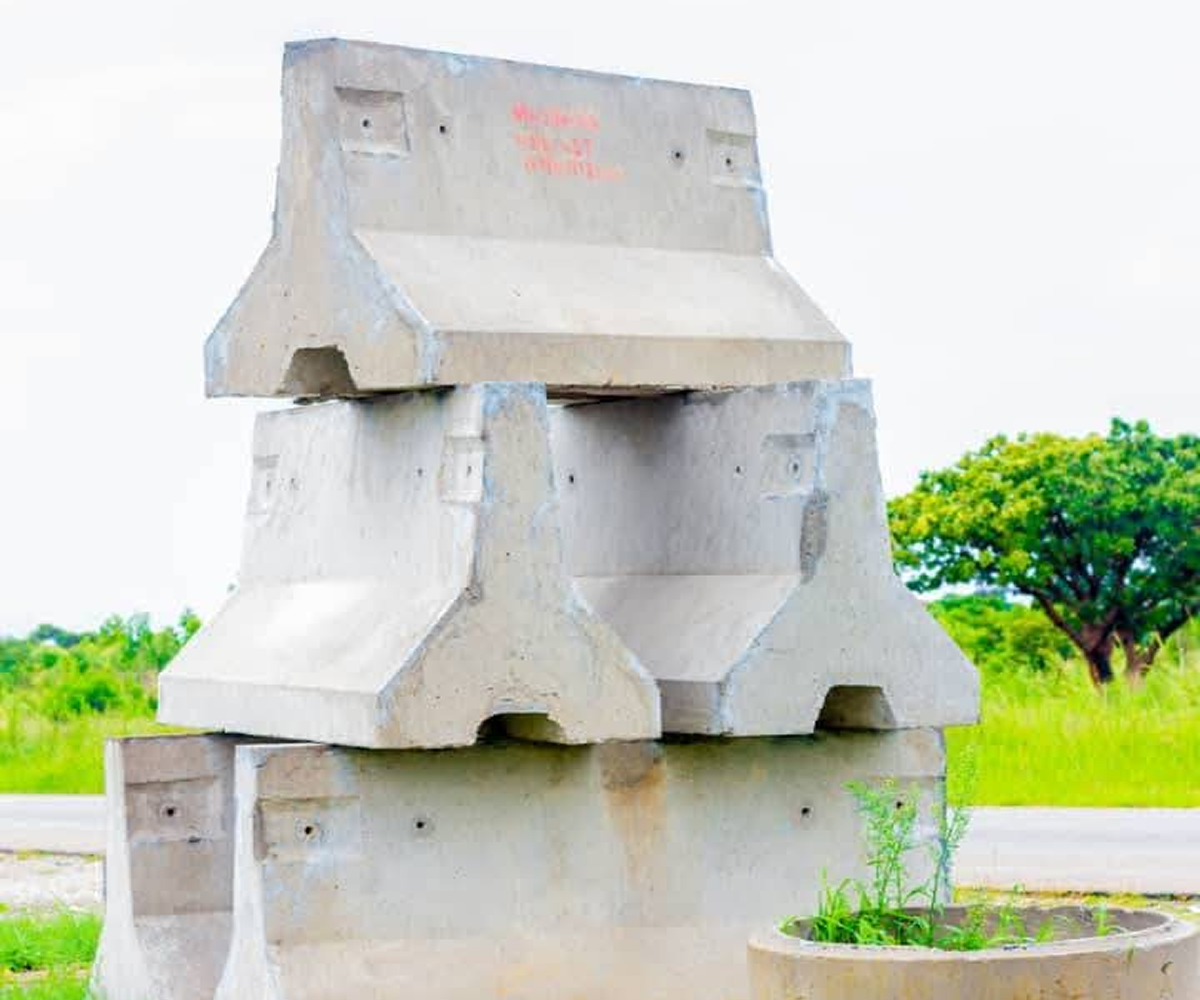
New Jersey Barrier Kerbs are heavy precast concrete safety barriers with a distinctive sloped profile designed to redirect vehicles and minimize collision impact. Named after the US state where they were first developed, these barriers have become the global standard for traffic separation and work zone protection..
The curved, sloping face design causes a vehicle’s wheels to ride up slightly upon impact, using the vehicle’s own weight and friction to slow it down and redirect it back into the direction of travel preventing crossover into opposing traffic or hazardous areas.
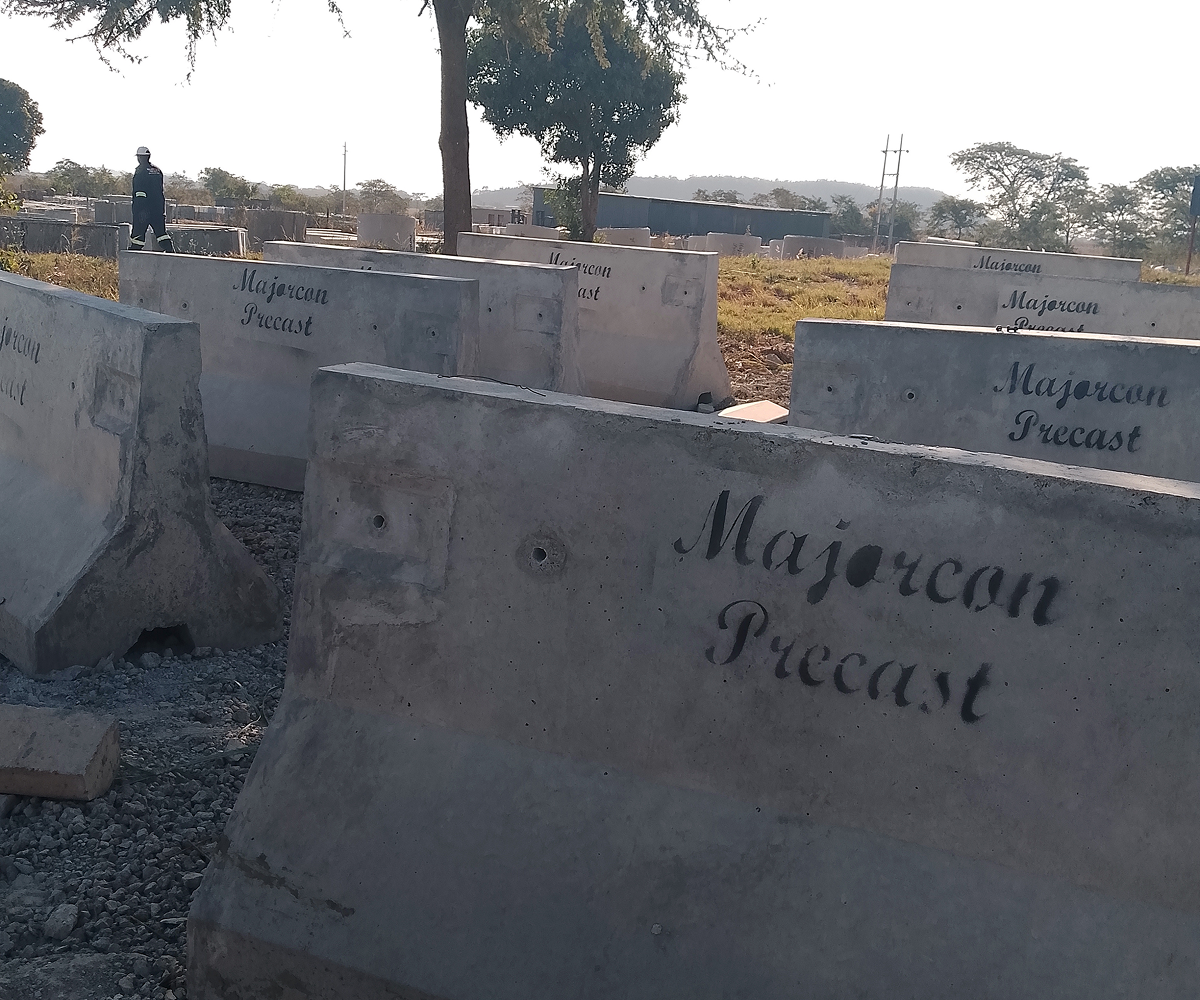
At Majorcon Precast, our New Jersey barriers are engineered for maximum safety and durability, providing critical protection for workers, motorists, and infrastructure. Build with confidence. Build with Majorcon Precast.
Primary Uses
- Dividing opposing traffic lanes on dual carriageways and motorways.
- Protecting workers and separating traffic from active work areas.
- Channeling vehicle movement during roadworks and events.
- Edge protection on bridges and elevated structures.
- Protecting pedestrian walkways in large car parks.
NJ Kerb (New Jersey Barrier)
Specification Sheet
Specifications
| Property | Specification |
|---|---|
| Material | Reinforced precast concrete, grade C50/60 |
| Concrete Strength | ≥ 50 MPa at 28 days |
| Reinforcement | Heavy steel cage |
| Standards | BS EN 1317, SANS 1551 |
| Profile | Parabolic sloping sides, flat bottom |
| Dimensions | Height 1000 mm, base width 750 mm, top width 250 mm |
Product Variants
| Length (mm) | Mass (kg) |
|---|---|
| 2000 | 3800 |
| 1500 | 2850 |
| 1000 | 1900 |
Ordering Notes
- No customizations: All kerbs are supplied as standard sizes and finishes only.
- Finish: Natural grey concrete.
- Reinforcement: As per standard specifications.
- Testing: Crash test certificates and concrete test reports available on request.
Why Choose Our New Jersey Barrier Kerbs
- Patented sloped profile safely redirects impacting vehicles back onto the roadway rather than allowing crossover.
- Massive concrete mass absorbs and dissipates collision energy, protecting vehicle occupants and adjacent areas.
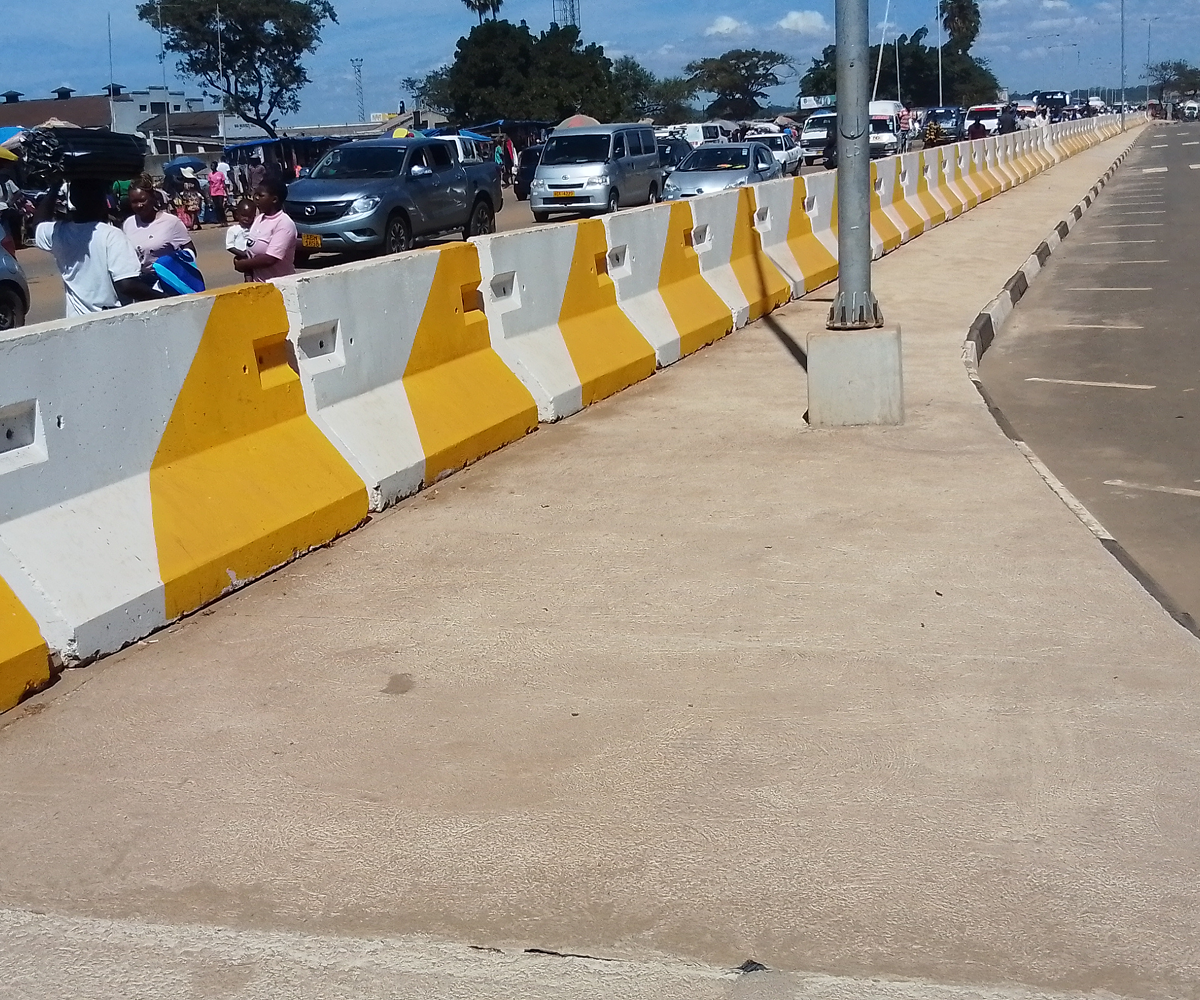
- Can be supplied with reflective markers, high-visibility paint, or bright concrete mixes for enhanced day and night visibility.
- Individual units can be arranged in continuous runs, with interlocking options for added stability.
- Once installed, concrete barriers require virtually no maintenance and withstand weather, vehicle impact, and time.
Frequently Asked Questions
New Jersey barriers are critical safety devices for high-risk areas. Here are answers to the technical questions we receive from traffic engineers, construction managers, and security consultants.
The patented profile works through vehicle dynamics:
Initial impact: Vehicle contacts the sloping lower face
Rise: The slope causes the vehicle’s wheels to ride up slightly
Energy absorption: The vehicle’s own weight creates friction against the barrier
Redirection: The combination of friction and barrier shape guides the vehicle back onto the road
Controlled deceleration: Speed is reduced without abrupt stopping
This design significantly reduces the risk of vehicle rollover and occupant injury compared to square-faced barriers.
The terms are often used interchangeably, but technically:
Jersey barrier: The original design developed in New Jersey, USA
New Jersey barrier: The evolved, standardized version now used worldwide
Concrete safety barrier: Generic term for all此类 products
All refer to the same basic sloped-profile design. Our barriers follow current international standards for safety barrier performance.
Our barriers are designed to meet various containment levels depending on specification:
Low containment: For parking areas and low-speed urban applications
Normal containment: For standard highway and construction zone use (H1, H2 levels)
High containment: For high-risk areas, bridges, and locations with heavy vehicle traffic (H3, H4 levels)
We can supply test certificates and technical data for specific containment ratings. Contact our technical team with your project requirements.
Yes, absolutely. New Jersey barriers are used for both:
Temporary installations: Construction zones, events, traffic management (often ballasted or pinned)
Permanent installations: Highway medians, bridge parapets, security perimeters (typically foundation-mounted)
For permanent installations, we recommend appropriate foundation design and may supply barriers with reinforcement extending into the foundation.
Several connection methods are available:
Interlocking ends: Shaped ends that fit together for alignment
Pin connections: Steel pins inserted through adjacent units
Post-tensioning: Cables running through multiple units for continuous strength
Reinforced continuity: Exposed reinforcement for casting into continuous foundation
The choice depends on the required containment level and whether the installation is temporary or permanent.
Yes. For enhanced safety, we offer:
Embedded reflective markers: At specified intervals along the barrier
Factory-applied reflective paint: Yellow, white, or custom colors
High-visibility concrete: Bright white or colored concrete mixes
Recesses for signage: Pre-formed slots for temporary or permanent signs
Cat’s eyes: Recessed road studs for lane marking
Safety visibility is critical—discuss your requirements with our Sales Team.
Properly manufactured and installed concrete barriers have a service life of 50+ years. They are:
Weather resistant: Unaffected by rain, sun, or temperature extremes
Corrosion proof: No rust or rot
Impact durable: Can survive multiple impacts with minor spalling
Low maintenance: No painting, sealing, or regular maintenance required
After significant impacts, individual damaged units can be replaced without affecting the entire barrier run.