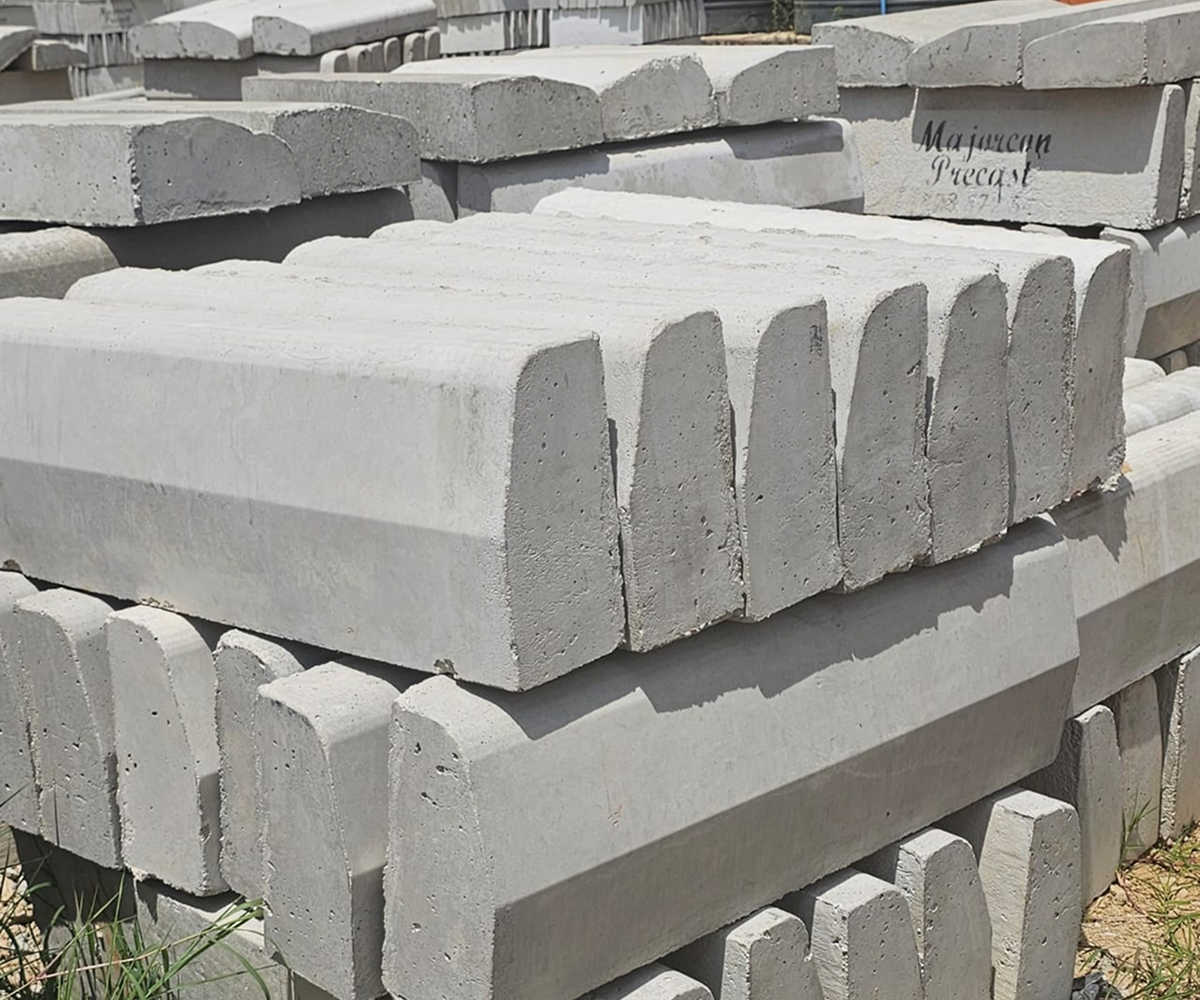
Heavy Duty Kerbs for High-Traffic & Industrial Areas
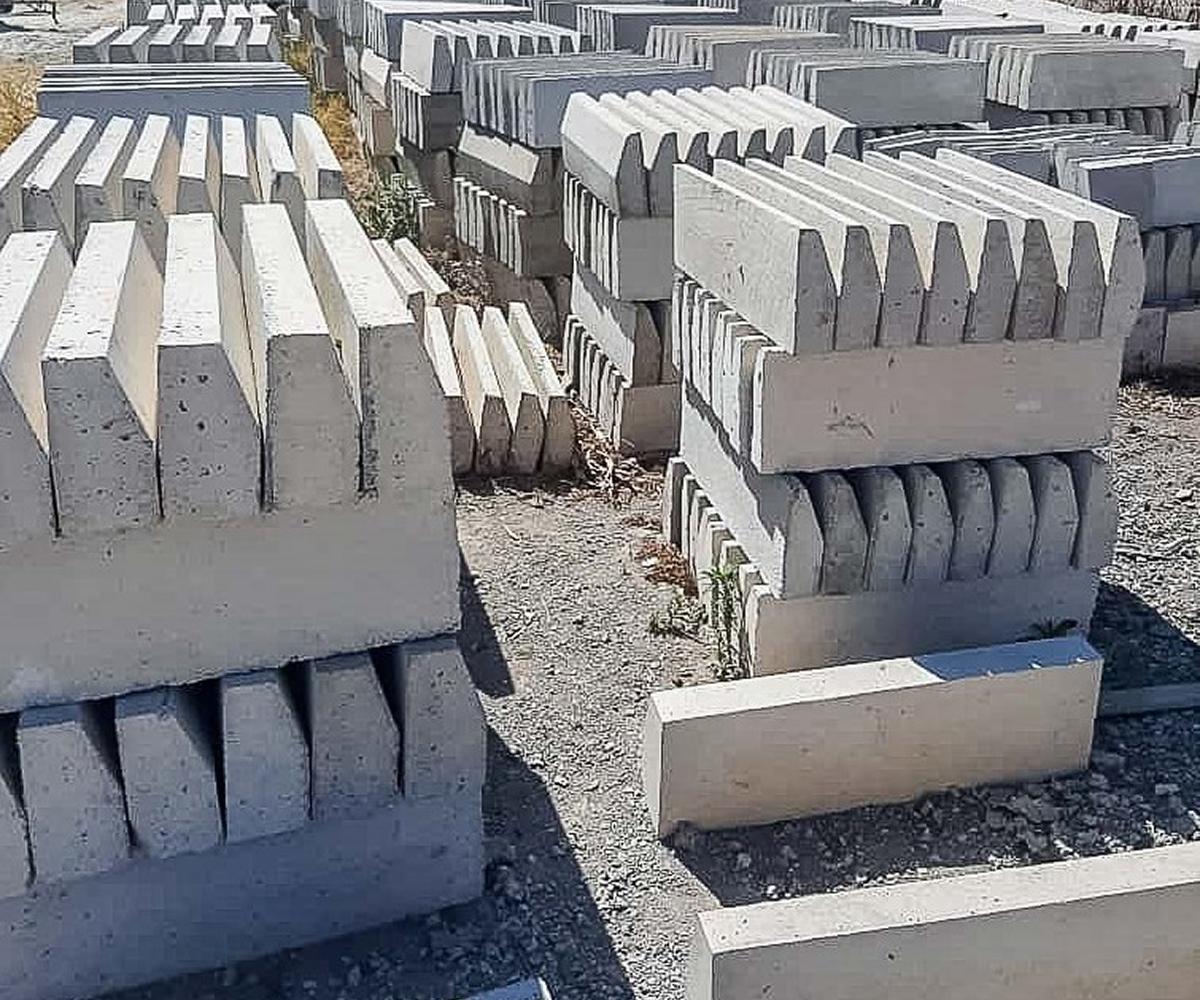
Heavy duty kerbs are precast concrete kerbs specifically designed to withstand high traffic volumes and heavy vehicle loads. They feature enhanced concrete strength, larger cross-sections, and greater impact resistance than standard kerbs.
At Majorcon Precast, our heavy duty kerbs are engineered for maximum strength and durability, making them the trusted choice for the most demanding traffic environments. Build with confidence. Build with Majorcon Precast.
Primary Uses
- Edge restraint on high-speed roads and national routes.
- Factory estates, warehouses, and distribution centers.
- Shopping centers, retail parks, and business districts.
- Withstanding repeated impact and weight of public service vehicles.
- Heavy vehicle maneuvering and docking areas.
- Rest areas and freight terminals.
Heavy Duty Kerb
Specification Sheet
Specifications
| Property | Specification |
|---|---|
| Material | Reinforced precast concrete, grade C50/60 |
| Concrete Strength | ≥ 50 MPa at 28 days |
| Reinforcement | Two 10 mm bars + stirrups @200 mm |
| Standards | BS EN 1340:2003, SANS 1058 |
| Profile | Tapered batter face: top 100 mm, bottom 150 mm |
| Height | 300 mm |
Product Variants
| Length (mm) | Mass (kg) |
|---|---|
| 1000 | 95 |
| 500 | 48 |
| 300 | 29 |
Ordering Notes
- No customizations: All kerbs are supplied as standard sizes and finishes only.
- Finish: Natural grey concrete.
- Reinforcement: As per standard specifications.
- Testing: Compressive strength and dimensional reports available on request.
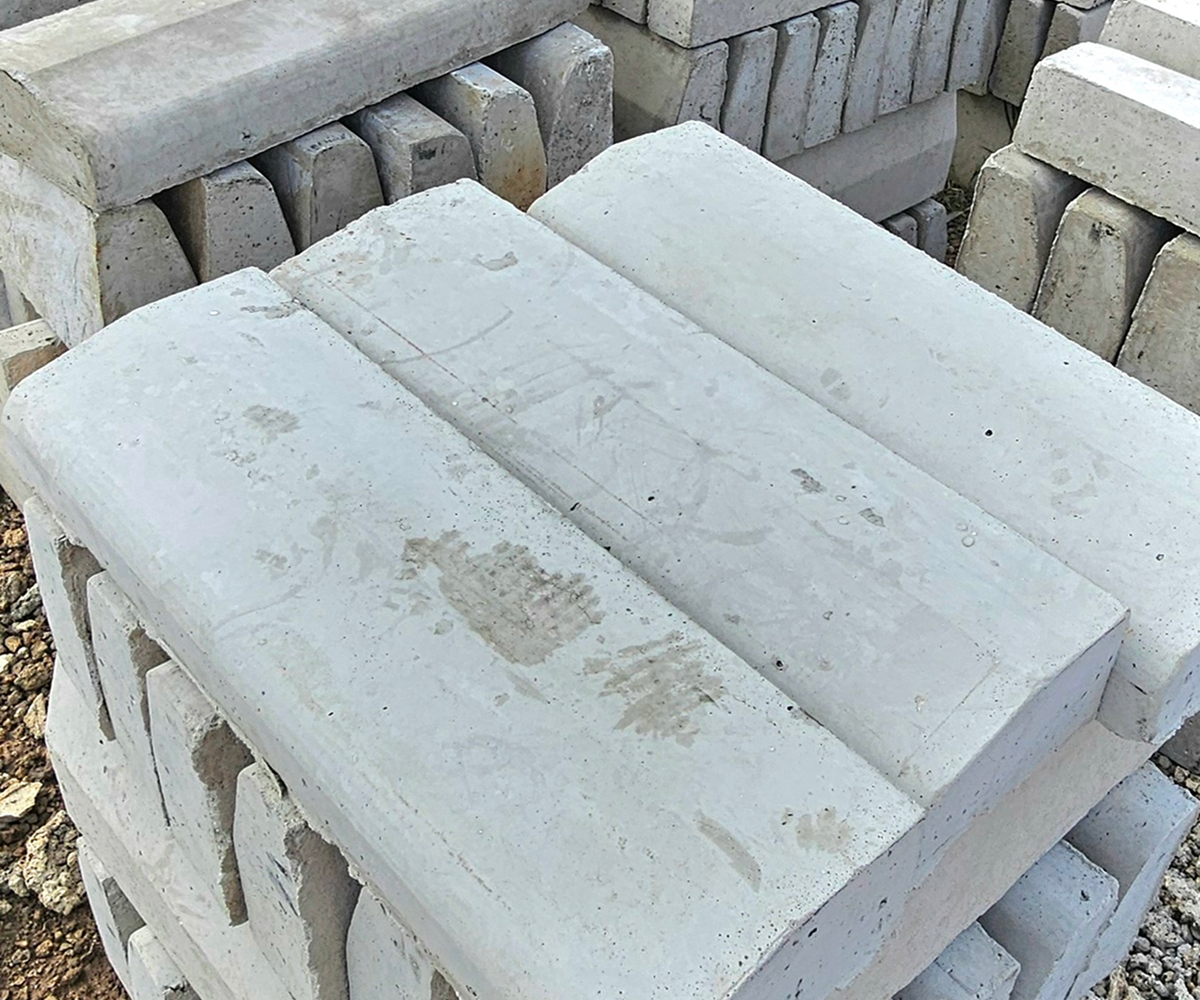
Why Choose Our Heavy Duty Kerbs
- Designed to withstand the weight and impact of heavy goods vehicles, buses, and continuous high-volume traffic.
- High-strength concrete formulation resists chipping and cracking from vehicle mounting and collision.
- Engineered for the most demanding environments including industrial estates, distribution centers, and major transport routes.
- Precision-cast with smooth finishes that enhance the appearance of streetscapes and public spaces.
- Larger profile allows for substantial concrete haunching, providing exceptional stability and edge restraint.
Frequently Asked Questions
Heavy duty kerbs are specified for the most demanding traffic environments. Here are answers to the technical questions we receive from civil engineers, industrial developers, and infrastructure contractors.
Our heavy duty kerbs are designed to withstand:
Static loads: Up to 60 tonnes from parked HGV vehicles
Impact loads: Repeated mounting and maneuvering of heavy vehicles
Traffic volumes: Thousands of vehicle passes per day, including buses and trucks
For applications requiring specific load certifications, we can provide test data and technical specifications. For extreme load requirements, we recommend our reinforced heavy duty options with steel reinforcement.
Heavy duty kerbs differ in several critical ways. For industrial estates, bus rapid transit routes, and highway projects, heavy duty kerbs are the appropriate specification.
| Feature | Municipal Kerbs | Heavy Duty Kerbs |
|---|---|---|
| Concrete Strength | 40MPa | 50MPa+ |
| Cross-section | Standard profile | Enlarged profile |
| Reinforcement | Usually unreinforced | Optional steel reinforcement |
| Impact Rating | Moderate traffic | HGV & bus impact |
| Haunching Requirement | Standard | Enhanced, deeper haunching |
| Typical Use | Urban roads | Highways, industrial zones |
Yes. Proper installation is critical for heavy duty performance:
Deeper excavation: To accommodate larger kerb profile and haunching
Enhanced bedding: Higher strength concrete bedding mix (typically 1:2:4)
Substantial haunching: Full concrete haunching to at least one-third of kerb height
Proper compaction: Thoroughly compacted sub-base to prevent settlement
Expansion joints: Properly spaced to accommodate thermal movement
We recommend engaging experienced civil contractors familiar with heavy infrastructure installation. Our technical team can provide detailed specifications.
Yes. For highway and industrial applications requiring integrated drainage, we can supply:
Combined kerb and drainage units with integral channels
Heavy duty gully kerbs with drainage outlets
Surface water channels designed to work alongside heavy duty kerbs
Discuss your drainage design with our technical team to determine the most effective solution for your project.
For major infrastructure projects requiring significant quantities of heavy duty kerbs, we recommend:
Initial consultation: 4-6 weeks before required delivery
Production lead time: 2-4 weeks depending on quantity and specifications
Delivery scheduling: Coordinated to match your construction program
Early engagement allows us to reserve production capacity and ensure timely delivery aligned with your project milestones. Contact our Sales Team to discuss your project timeline.
Yes. We manufacture purpose-made radius heavy duty kerbs for highway curves, roundabouts, and junction radii. These are produced to your specified radius to ensure proper fit and professional finish. For highway projects, using manufactured radius units is strongly recommended over cutting straight kerbs on site.
Yes. Our heavy duty kerbs use high-density, low-permeability concrete that provides excellent resistance to:
De-icing salts used on highways during winter
Diesel and oil spills in loading bay areas
Industrial chemicals in factory and warehouse environments
Extreme weather exposure including freeze-thaw cycles
This chemical resistance ensures long service life even in harsh industrial and highway environments.
Absolutely. Ports, container terminals, and freight handling facilities require the highest specification kerbing available. For these extreme applications, we recommend:
Maximum concrete strength (50MPa+)
Steel reinforcement for additional impact resistance
Enhanced profile with deeper foundations
Heavy-duty haunching specifications
Contact our technical team to discuss your specific port or terminal requirements for a customized solution.
While we can accommodate smaller quantities for commercial site improvements, heavy duty kerbs are typically ordered in larger volumes for highway and industrial projects. For standard profiles, we can supply from stock for immediate needs. For large infrastructure projects, we offer competitive volume pricing and scheduled deliveries.